A misty dawn trek through Uganda's Bwindi Forest leads to an unforgettable encounter with a family of mountain gorillas — offering a rare glimpse into one of Africa's most extraordinary wildlife experiences.
The morning began long before sunrise. At 5:00 a.m., the dense hills of southwestern Uganda were still wrapped in darkness, and a cool mist drifted silently through the ancient rainforest. From my lodge overlooking Bwindi Impenetrable National Park, the only sounds were distant insects, the occasional bird call, and the soft rustle of trees moving with the mountain breeze.
For years I had seen photographs of mountain gorillas in documentaries and conservation magazines. I had imagined what it would feel like to stand just metres from one of humanity's closest relatives. Yet no image, video or story could fully prepare me for what awaited deep within the forest.
Arrival at the trekking headquarters
As dawn's early light brightened the sky, our group gathered at the park headquarters — travellers from across the world, cameras ready, hiking boots laced, an unmistakable sense of anticipation in the air. The briefing began shortly after sunrise. Rangers explained the rules: stay flat-footed, keep your distance, avoid sudden movements, speak softly, and never stay with the gorillas for more than one hour.
These regulations exist to protect the endangered mountain gorillas and to keep their natural behaviour undisturbed. Some travellers had crossed thousands of kilometres for this single experience; others had waited years to secure a permit. We split into small groups, met our guides and trackers, and set off into the trees.
Heading into the forest
The first steps into the rainforest felt like entering another world. Bwindi is one of Africa's oldest forests — estimated at over 25,000 years old. Massive trees tower overhead, their trunks wrapped in moss and vines, ferns spreading across the floor while sunlight filters through layers of dense vegetation. The trek quickly became challenging: narrow paths twisted through tangled undergrowth, and vines snagged at every step.
About two hours in, our guide paused and pointed toward a patch of flattened vegetation. The gorillas had been here that morning. Nearby we found freshly broken branches and feeding signs. The forest suddenly felt more alive — every rustle of leaves felt like a hint of the great apes we had come to find.
Meeting the silverback
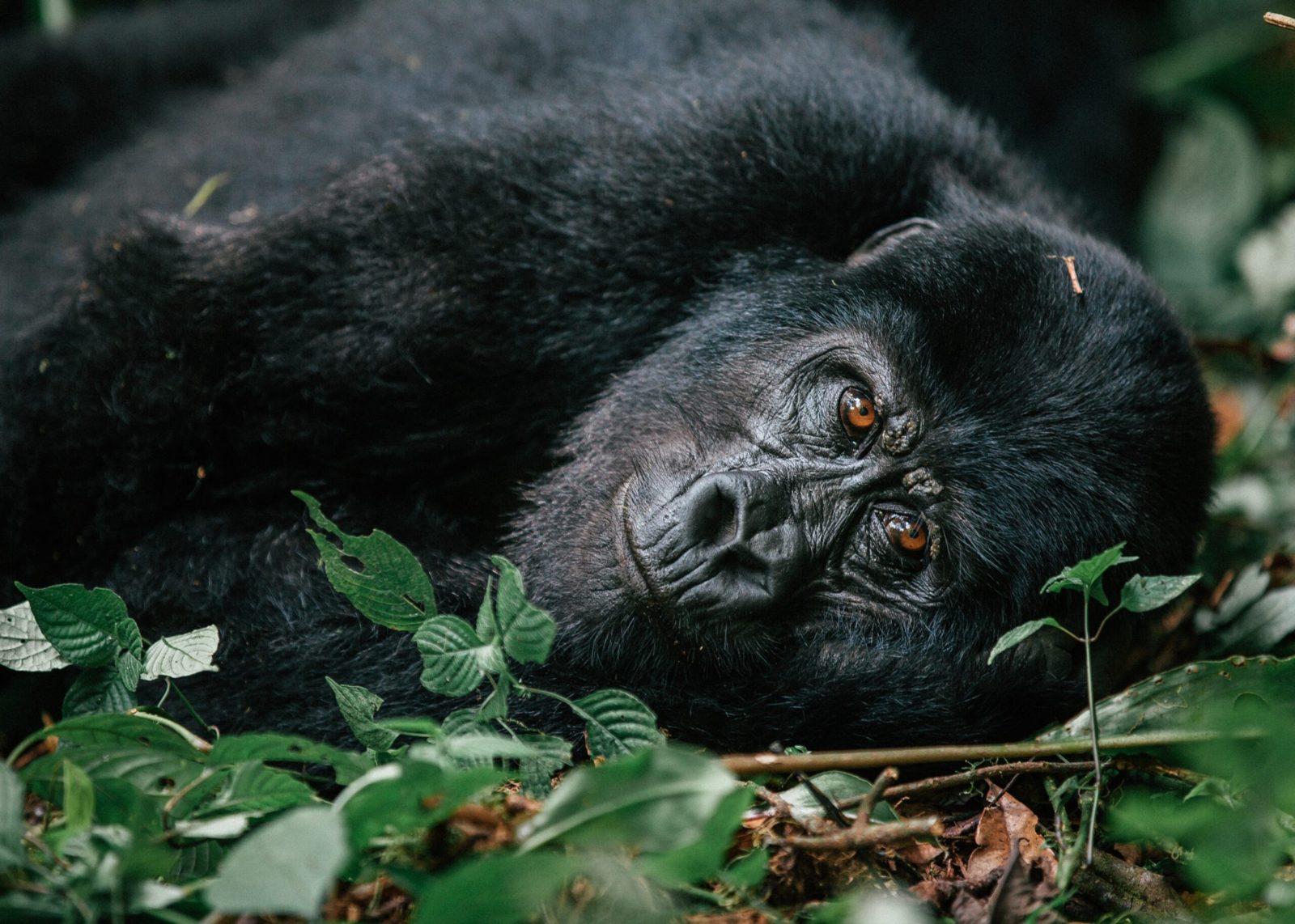
Just ahead, partly hidden among the leaves, sat a silverback gorilla. Under the guidance of our ranger, more gorillas slowly appeared from the surrounding vegetation: a mother nursing while her infant clung to her chest, two juveniles wrestling beside a tree, another silverback moving lazily through the undergrowth.
It is hard to explain the physical presence of a mountain silverback — the broad chest, the powerful arms, the immense strength held with such calm and control. He watched over his family with quiet authority. For a moment, the distance between humans and gorillas felt remarkably short. The connection is ancient, and somehow very visible.
One hour in another world
A curious youngster wandered within a few metres of our group. The ranger signalled us to stay still. The gorilla looked at us with wide eyes, then casually ambled away. There was no barrier, no enclosure — just a wild animal sharing a moment of curiosity with another species.
Reflections on conservation
As we trekked back, our guides spoke of the conservation efforts that have helped mountain gorilla populations recover. Park authorities, researchers, veterinarians and local communities have worked together to safeguard their future — and today, responsible tourism plays a vital role. Every trekking permit contributes directly to ranger patrols, community development and protecting the forest the gorillas call home.
Standing there among them, the importance of conservation became deeply personal. These were not distant animals in a documentary; they were individuals with families, personalities and social bonds. Long after the photographs are archived and the boots are packed away, the memory of that morning remains vivid — a reminder that some of the world's greatest treasures are not monuments or cities, but living creatures moving within ancient forests.